
Revolutionizing Healthcare: MoH Unveils State-of-the-Art Health Information System

The Government of Sierra Leone, through its Ministry of Health and partners, today launched a state-of-the-art Health Information Hub, the first in the country, marking a significant milestone in the country’s efforts to revolutionize healthcare delivery.
This cutting-edge digital innovation, championed by the Minister of Health, Dr. Austin Demby and his senior management team, aims to harness digital technology to foster evidence-based decision-making, enhance service quality, and accelerate progress toward universal health coverage. This development aligns with the United Nations’ Sustainable Development Goal (SDG) 3: Good Health and Well-being. Specifically, it supports targets related to ensuring access to quality essential health services and achieving universal health coverage, critical components of Sierra Leone’s broader health strategy.
In his keynote address, the Minister of Health, Dr. Austin Demby, emphasized the importance of digitalization for modern healthcare. “Digitalization is not an option. It is not a luxury or a nice-to-have. It is a requirement,” he stated.
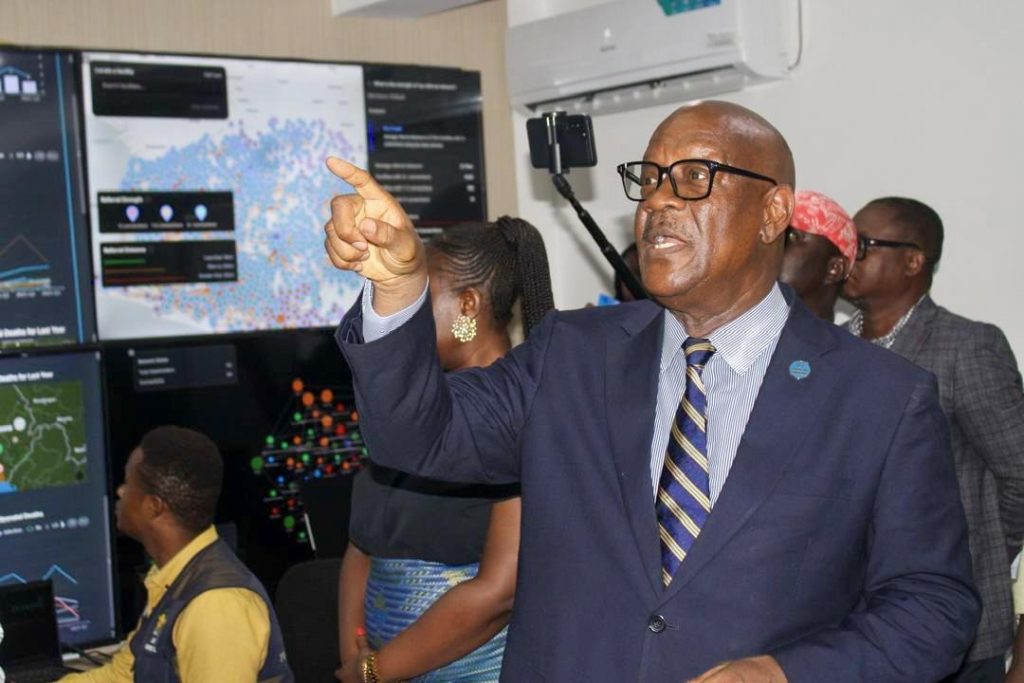
Minister Demby explained that the new system addresses longstanding issues of data fragmentation, which have hampered effective health governance. “Our health data ecosystem has remained fragmented. Systems do not always communicate with one another, and information sometimes arrives late or incomplete. This has constrained our ability to make timely, evidence-based decisions,” he added.
The Health Information Hub integrates data from multiple platforms, including the District Health Information System (DHIS2), and features twelve real-time dashboards along with a 3D geospatial map equipped with advanced analytics. With the hub fully functional, Sierra Leone is now part of a few countries on the continent including Rwanda, with the digital capability to get quality data that influence critical healthcare planning and decisions—whether at the national level, within districts, or at individual health facility levels.
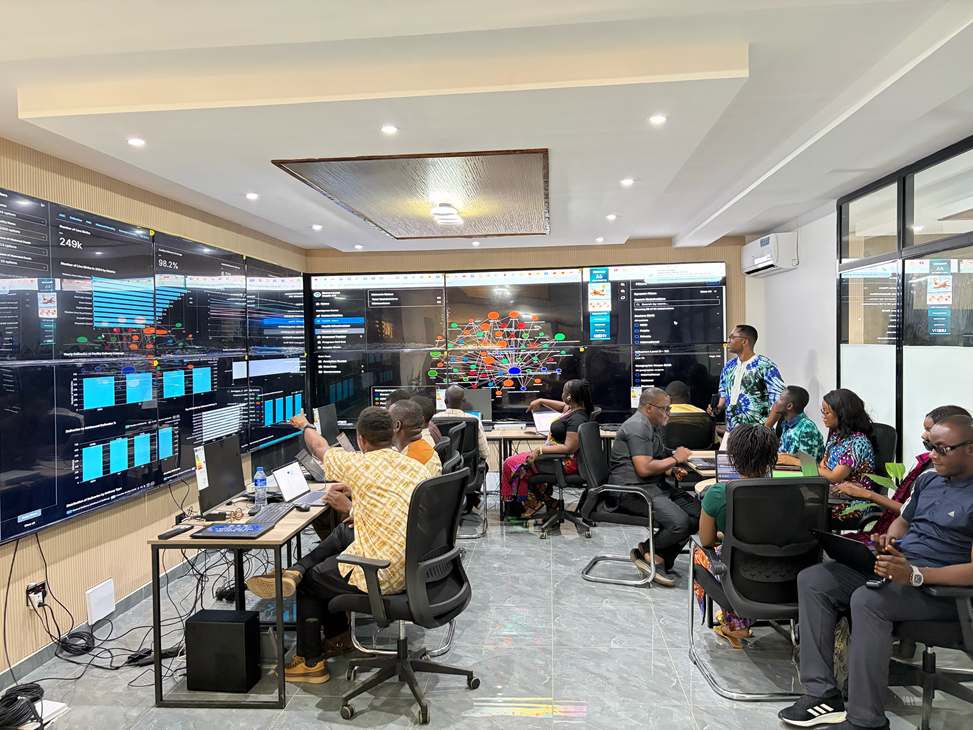
Dr. Demby stressed that the new information hub will utilize data to improve planning, accountability, and emergency response mechanisms. “This is a strategic tool to save lives,” he pointed out. For her part, the UN Resident Coordinator in Sierra Leone, Seraphine Wakana, described the facility as a “landmark achievement” that reflects strong national leadership and commitment to evidence-driven governance. “Timely and high-quality data is a necessity, enabling leaders to see who is being reached, who is being left behind, and where action is needed.”

Wakana reaffirmed the United Nations’ support for Sierra Leone’s digital health initiatives. “The UN is finalizing an additional flagship program to strengthen routine data systems across sectors,” she announced. “This will help develop a sustainable, nationally owned health information system, with the hub playing a central role in this broader data network.”
She concluded by emphasizing that “this is about putting people at the center of the health system and ensuring data guides decisions that improve lives.”
Dr. Mustapha Kabba is the Deputy Chief Medical Officer-Clinical at the Ministry of Health. He highlighted the system’s capacity to transform raw data into actionable insights. “With the launch of this health information hub, we will now have access to real-time data, enabling us to respond promptly to emerging health issues, prioritize critical interventions, and optimize resource allocation,” he said.

According to Dr. Kabba, the system provides comprehensive visibility into healthcare delivery at all levels, ranging from districts and communities to referral networks—facilitating more effective planning and monitoring. “Understanding what’s happening across different parts of the health system allows us to address challenges more efficiently,”
The new platform consolidates data from diverse sources such as healthcare facilities, human resources, supply chains, and referral systems. This integration aims to give policymakers and health workers a clearer picture of national health trends, including maternal and child health, neonatal mortality, immunization coverage, and other key indicators.

While acknowledging potential hurdles, such as the need for specialized skills to interpret complex analytics—Dr. Kabba assured that the Ministry is working closely with partners to build local capacity. “We have already identified young professionals within our team to develop the necessary expertise and ensure sustainability of this system,” he said.
He emphasized that understanding data-driven insights will enable better resource distribution, identify underserved areas and ultimately improve health outcomes for all citizens.