
Healthcare workers across Sierra Leone often contend with daily transportation difficulties with the majority relying mostly on unreliable public commute systems that are often fraught with long cues, fatal road accidents and high travel costs; all factors that affect punctuality, service delivery and increase the strain on an already demanding profession. There are very unpleasant stories of health workers loosing their lives while trying to get to work using available public transportation systems, others have lost either their arms or legs through motorbike accidents and so on.
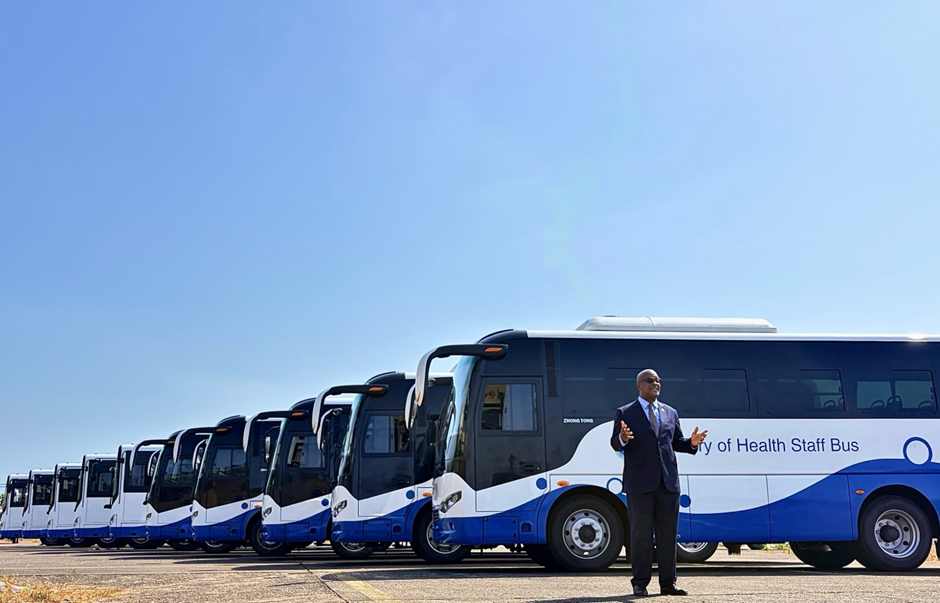
The Government, through its Ministry of Health, has found a new permanent solution to this long-standing problem by procuring new sets of fleets including 10 new staff buses, 9 utility vehicles and 450 motor bikes that will be dedicated to transporting health workers to and from work around the country. The new buses in particular, five 50-seaters and five 38-seaters, will be distributed judiciously with five going to key regional headquarter towns and the remaining staying in the western area rural and urban.
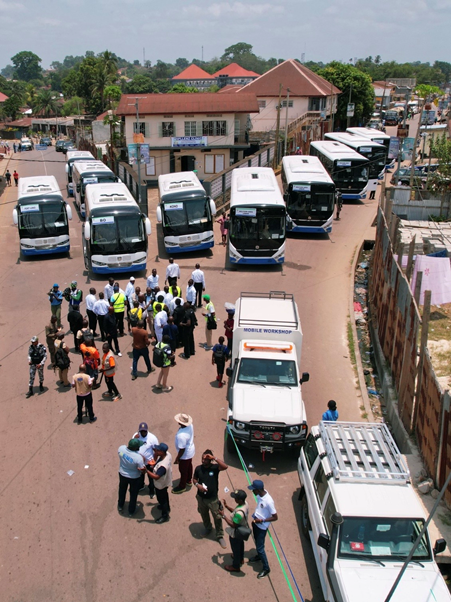
Launching this bold initiative in Bo, President Julius Maada Bio said the provision of transportation is essential if health workers are expected to serve communities effectively; adding that the buses will ease commuting difficulties and support health workers reach duty stations in time, particularly in hard-to-reach areas.
“To allow you get to work on time and not arrive there sweating, you need mobility. And, if we are saying that you must reach the last mile, then mobility becomes essential,” the President said. He emphasized that the decision followed sustained advocacy from the Minister of Health, adding that the buses should be seen as critical tools for service delivery rather than mere convenience.
“This is just the beginning,” President Bio added, urging health workers to take proper care of the buses, which he described as essential equipment.
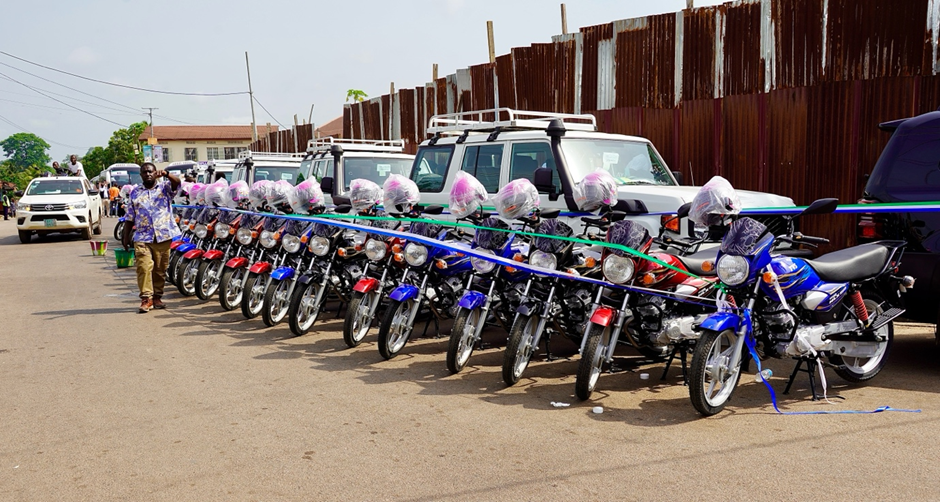
Minister of Health, Dr. Austin Demby, said the buses represent much more than just means of transportation, framing them as part of a broader approach to supporting frontline health workers.
“These new fleet of vehicles and motor bikes may seem like the most practical of our investments in the health sector and that is precisely the point,” Minister Demby said. He explained that the initiative reflects the Ministry’s philosophy of “accompaniment,” a principle focused on removing all barriers that hinder effective health service delivery.
“Ten buses are the Ministry’s way of saying thank you and to say that we see the challenges you face, and we are doing something about them,” Minister Demby concludes. You can get more detail on this story in the video highlight below.